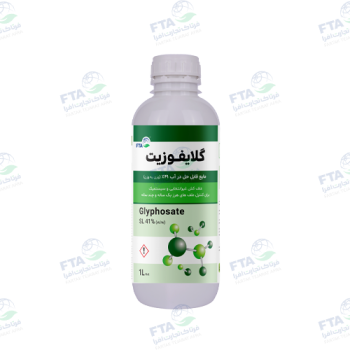

Glyphosate
- Product Information
- Product Introduction
- Product Instructions
- Safety tips
Product Name: Glyphosate
Formulation: Soluble liquid (SL 41%)
Active Ingredient: 410 g/kg Glyphosate
Molecular Formula: C6H17N2O5P
HRAC Group: HRAC G, WSSA 9
Hazard Class: U (It is not acutely toxic)
Toxicity: Acute Oral LD50 for rats: > 5000 mg/kg
Packaging: 1L
This is a non-selective, systemic herbicide, also known commercially as Roundup. It belongs to the phosphonic acid chemical group and disrupts plant enzyme systems, inhibiting the synthesis of amino acids (specifically EPSPS enzyme). For optimal results, this herbicide should be applied during the active growth stage of weeds. Avoid spraying onto the foliage and trunks of young trees. Mixing with glyphosate or ammonium sulfate reduces the application rate. Wind drift of this herbicide in adjacent fields and orchards will cause damage to agricultural crops and orchard plants.
Glyphosate is registered with the Iranian Pesticide Supervisory Board for the control of the following weeds:
| preharvest interval | Dosage & time of consumption | Weed | Crop |
| So far, no Carnes period has been registered. | 4 to 12 liters per hectare depending on the type of weed at the time of maximum weed activity (flowering) | Annual and perennial weeds | fruit trees |
| 10 to 20 per thousand after the growth of grasses in the form of spots | Sugarcane |
Environmental Toxicity: It is hazardous to fish and other aquatic organisms.
Precautions: Strictly avoid eating, drinking, or smoking during application.
Symptoms of Poisoning: Headache, dizziness, nausea, diarrhea, and visual disturbances.
First Aid: In case of poisoning, immediately consult a physician with the Herbicide label.
Antidote: There is no specific antidote. Never give anything by mouth to an unconscious victim